
In-Network vs. Out-of-Network
Why a provider’s network status can affect coverage and costs.
Many health plans work with a network of doctors, hospitals, and other providers. Whether a provider is in your plan’s network can make a big difference in coverage and costs.
What is a provider network?
A provider network is the group of doctors, hospitals, pharmacies, and other providers that have an agreement with a health plan to provide covered services at negotiated rates.
- In-network providers have an agreement with your specific plan.
- Out-of-network providers do not have an agreement with your specific plan.
Possible differences in costs and coverage
| In-network | Out-of-network | |
|---|---|---|
| Cost-sharing | Usually lower | Often higher, or not covered, depending on the plan |
| Balance billing | Generally not permitted for covered services | May be possible in some situations |
| Out-of-pocket maximum | Usually applies | May not apply, or may have a separate limit |
Balance billing is when a provider bills you for the difference between what they charge and the plan’s allowed amount.
“We accept your insurance” vs. “in-network”
When checking, ask about your specific plan name, not just the insurance company name. You can also check your plan’s provider directory or call the number on your insurance card.
Emergencies and other special situations
Emergency care and some care received at in-network facilities may have additional protections from surprise out-of-network bills under federal rules. These protections have specific conditions and exceptions. For general information, see CMS.gov — No Surprises (external official resource).
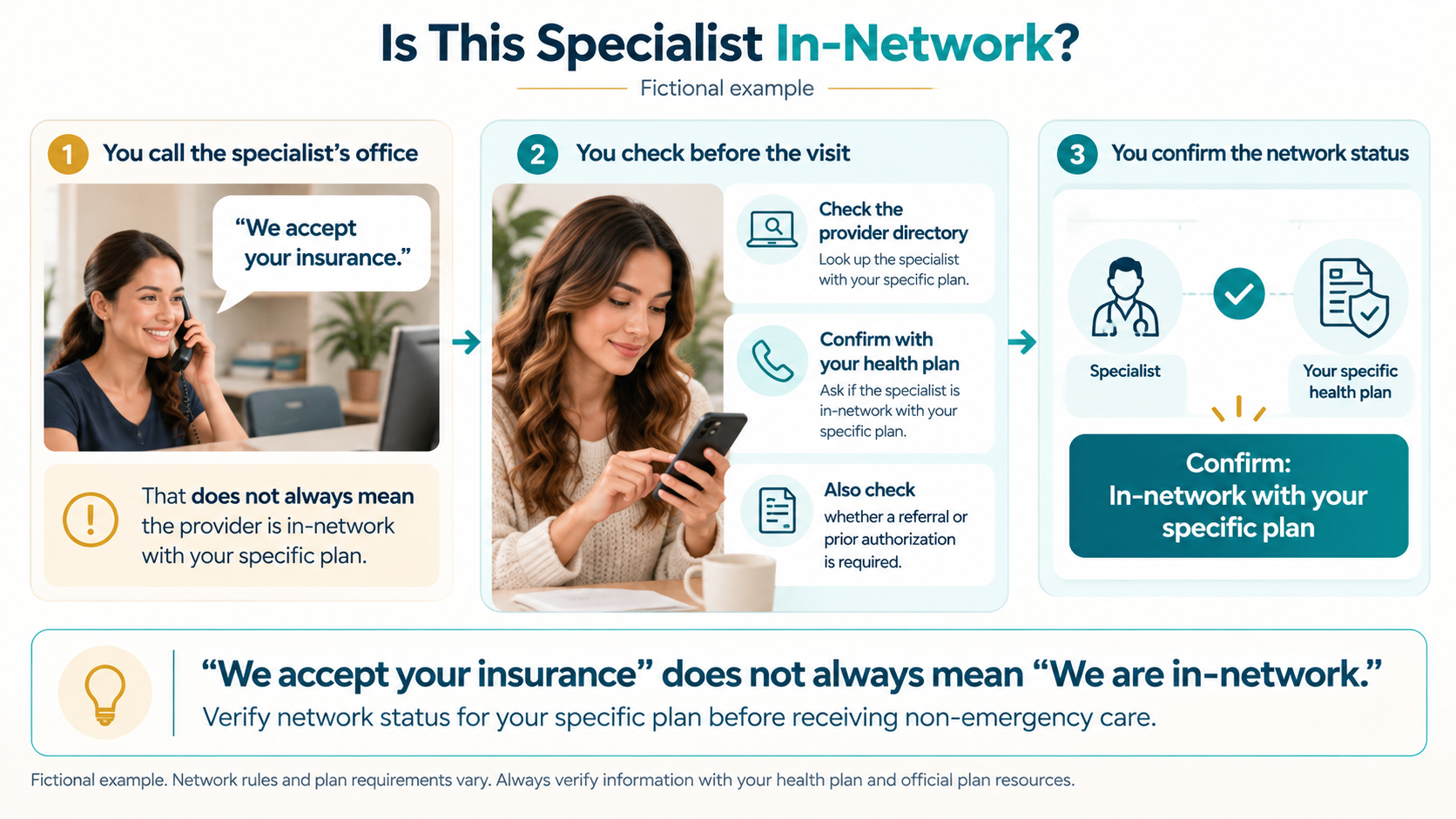
Real-life example: Checking a new specialist (fictional example)
Anna needs to see a specialist. The office tells her, “We accept your insurance.” Before the visit, Anna checks her plan’s online provider directory and calls the number on her insurance card to confirm the specialist is in-network with her specific plan. She also asks whether a referral or prior authorization is needed.
Key takeaways
- In-network providers have an agreement with your specific plan; out-of-network providers do not.
- Out-of-network care may cost more or may not be covered, depending on the plan.
- ‘We accept your insurance’ does not always mean in-network with your plan.
- Confirm network status with your plan before non-emergency care.
Educational information only. Examples are fictional and do not describe any real insurer or plan. Health-plan terms and requirements vary — always verify information using your official plan documents. Read the disclaimer.