
HMO vs. PPO vs. EPO
General differences between common plan types.
HMO, PPO, and EPO are common names for types of health plans. Each type tends to handle networks and referrals differently. This module covers general differences only — specific plan rules vary.
The three plan types at a glance
- HMO (Health Maintenance Organization) — usually focuses on in-network care and often uses a primary care provider to coordinate care.
- PPO (Preferred Provider Organization) — usually offers more flexibility to use out-of-network providers, often at a higher cost.
- EPO (Exclusive Provider Organization) — usually covers in-network care only, except in certain situations such as emergencies. Referral rules vary by plan.
General differences
| Feature | HMO | PPO | EPO |
|---|---|---|---|
| Network flexibility | Usually in-network only | Usually in- and out-of-network | Usually in-network only |
| Referrals to specialists | Often required | Usually not required | Varies by plan |
| Out-of-network care | Generally not covered except emergencies | Often covered at higher cost-sharing | Generally not covered except emergencies |
These are general patterns. Specific plan rules vary.
No plan type is automatically “better”
Each type involves trade-offs between flexibility, coordination of care, and costs. Which features matter most depends on each person’s situation. The decision remains yours.
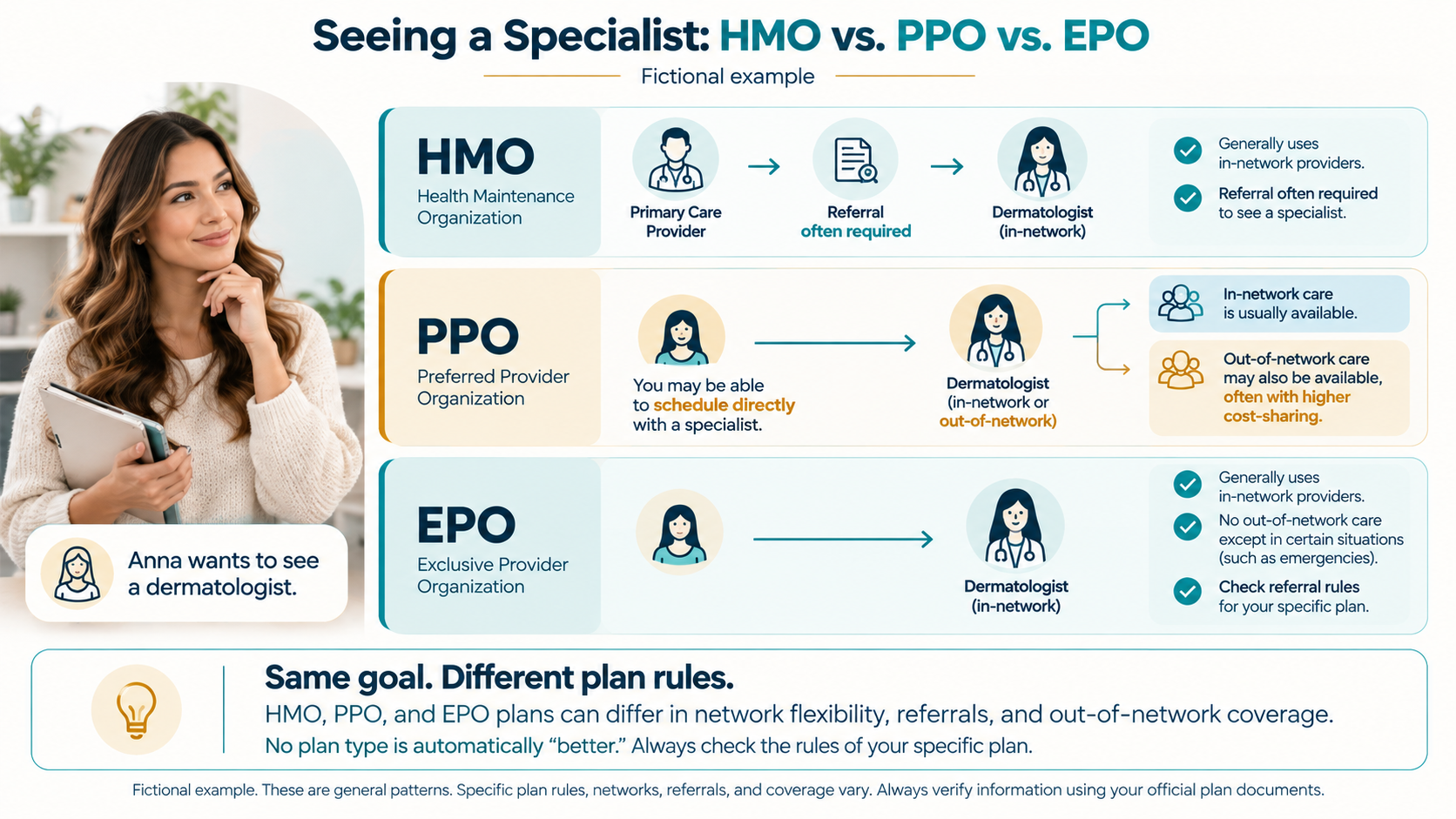
Real-life example: Seeing a specialist under different plan types (fictional example)
Anna wants to see a dermatologist. Under a fictional HMO, she may first need a referral from her primary care provider. Under a fictional PPO, she may be able to schedule directly, and an out-of-network dermatologist may be covered at higher cost-sharing. Under a fictional EPO, she would generally need to choose an in-network dermatologist, and she would check her plan’s referral rules.
Key takeaways
- HMOs, PPOs, and EPOs tend to differ in network flexibility, referrals, and out-of-network rules.
- No plan type is automatically better; each involves trade-offs.
- Specific plan rules vary — always check the plan documents.
Educational information only. Examples are fictional and do not describe any real insurer or plan. Health-plan terms and requirements vary — always verify information using your official plan documents. Read the disclaimer.