
What Is an Out-of-Pocket Maximum?
The annual limit on applicable cost-sharing.
The out-of-pocket maximum can help you understand the most you might pay in cost-sharing for covered in-network services during a plan year. This module explains what it includes and what it usually does not.
What is an out-of-pocket maximum?
An out-of-pocket maximum is an annual limit on applicable member cost-sharing for covered in-network services under the plan. Once your applicable cost-sharing reaches this limit, the plan generally pays 100% of covered in-network services for the rest of the plan year.
What usually counts
Depending on the plan, amounts that usually count toward the out-of-pocket maximum include:
- Deductible payments
- Copays
- Coinsurance
These count only for covered services, and generally only for in-network care.
What usually does not count
- Premiums generally do not count toward the out-of-pocket maximum.
- Services the plan does not cover.
- Out-of-network care, or amounts above the allowed amount, depending on the plan.
Limits change over time
Out-of-pocket limits for many plans are set within ranges that can change from year to year. Rather than relying on a general number, check the out-of-pocket maximum listed in your specific plan documents. For general information about current rules, see HealthCare.gov (external official resource).
Real-Life Example: Reaching the Out-of-Pocket Maximum (fictional example)
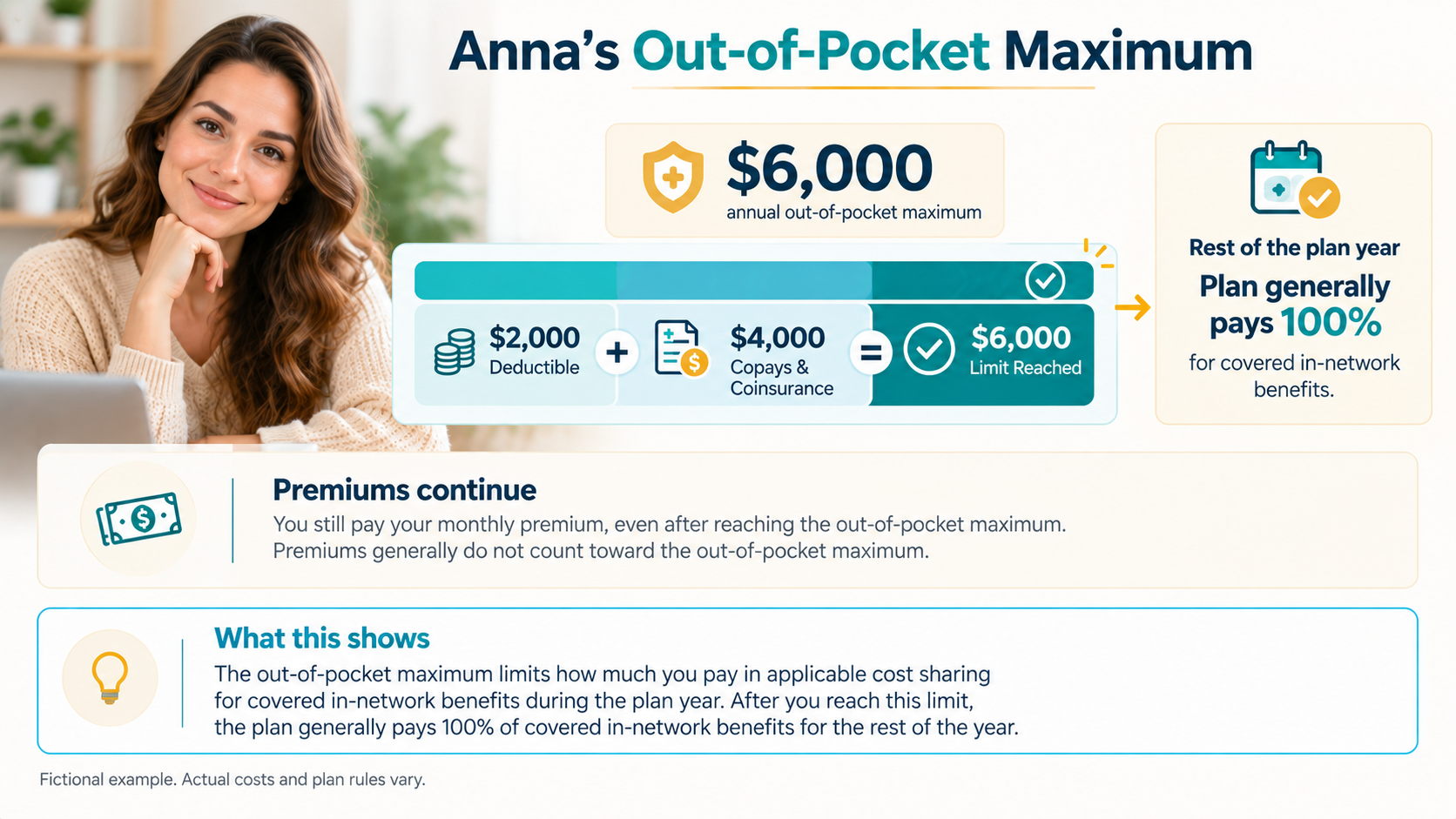
Anna’s fictional health plan has a $6,000 annual out-of-pocket maximum.
During the year, she pays $2,000 toward her deductible and another $4,000 in copays and coinsurance for covered in-network services that count toward the limit.
$2,000 + $4,000 = $6,000
Anna has now reached the $6,000 out-of-pocket maximum under this fictional plan.
For the rest of that plan year, the plan generally pays 100% of the cost of covered in-network benefits. Anna still continues to pay her monthly premium.
What this shows: The out-of-pocket maximum limits how much a person pays in applicable cost sharing for covered in-network benefits during the plan year. Premiums generally do not count toward this limit.
Key takeaways
- The out-of-pocket maximum is an annual limit on applicable cost-sharing for covered in-network services.
- Premiums generally do not count toward this limit.
- Check your specific plan documents for your limit and what counts toward it.
Educational information only. Examples are fictional and do not describe any real insurer or plan. Health-plan terms and requirements vary — always verify information using your official plan documents. Read the disclaimer.