
Copay vs. Coinsurance
A fixed amount versus a percentage — and why the difference matters.
Copays and coinsurance are both ways you may share the cost of covered services. The main difference is whether you pay a fixed dollar amount or a percentage.
What is a copay?
A copay is a fixed amount that may apply to certain covered services, such as an office visit or a prescription. For example, a fictional plan might have a $30 copay for a primary care visit.
What is coinsurance?
Coinsurance is a percentage of the allowed cost of a covered service that the member may pay. The allowed amount is the amount the plan recognizes for a covered service, which may be lower than the amount a provider bills.
Side by side
| Copay | Coinsurance | |
|---|---|---|
| What it is | A fixed dollar amount | A percentage of the allowed amount |
| Fictional example | $30 per visit | 20% of a $500 allowed amount = $100 |
| Predictability | Usually easier to predict | Changes with the cost of the service |
How they interact with the deductible
The interaction with the deductible varies by plan. In some plans, copays apply to certain services even before the deductible is met. In others, coinsurance begins only after the deductible is met. Some plans use both copays and coinsurance for different services.
Real-Life Example: Copay vs. Coinsurance (fictional example)
Anna’s fictional health plan uses different types of cost sharing for different services.
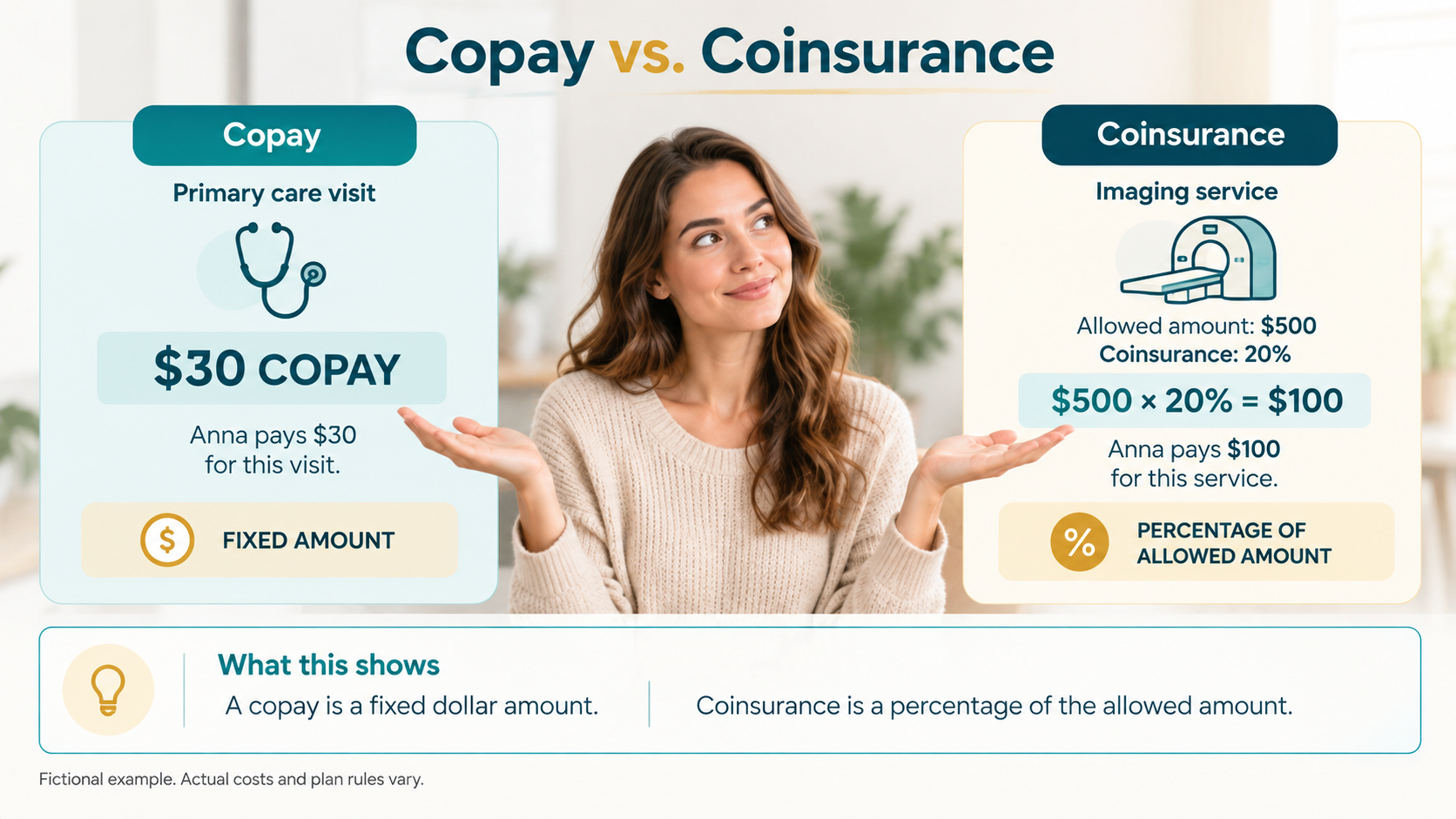
For a primary care visit, her plan lists a $30 copay. Anna pays the fixed $30 amount for that visit.
Later, Anna receives a covered imaging service with an allowed amount of $500. Under this fictional example, her deductible has already been met and the plan uses 20% coinsurance for this service.
20% of $500 = $100
Anna pays $100 in coinsurance.
What this shows: A copay is a fixed dollar amount, while coinsurance is a percentage of the allowed amount. How these costs apply depends on the plan and the service.
Key takeaways
- A copay is a fixed amount; coinsurance is a percentage of the allowed amount.
- Coinsurance costs change with the price of the service.
- How copays and coinsurance interact with the deductible varies by plan.
Educational information only. Examples are fictional and do not describe any real insurer or plan. Health-plan terms and requirements vary — always verify information using your official plan documents. Read the disclaimer.