
What Is a Deductible?
A simple explanation with real-life examples.
The deductible is one of the most common health-coverage terms, and one of the most misunderstood. This module explains what it is, how it can work, and what to check in your own plan.
What is a deductible?
A deductible is an amount you may need to pay toward certain covered services before your health plan begins paying its share for those services.
Deductibles usually reset each plan year. Plans can have different deductible amounts, and some plans have separate deductibles for different types of care, such as prescription drugs, or for individuals and families.
How it can work
- For covered services that are subject to the deductible, you may pay the allowed amount until the deductible is met.
- After the applicable deductible is met, the plan may begin sharing the cost of those services, often through copays or coinsurance.
- Payments that count toward the deductible usually also count toward the out-of-pocket maximum, depending on the plan.
Services that may be covered before the deductible
Not everything has to wait for the deductible. Depending on the plan, some covered services may be available before the deductible is met — for example, certain preventive services or services with a set copay.
What may not count toward the deductible
Not all spending counts toward a deductible. Depending on the plan, these usually do not count:
- Monthly premiums.
- Services the plan does not cover.
- Amounts above the allowed amount charged by an out-of-network provider.
- In some plans, copays for certain services.
What to check in your plan
- The deductible amount for an individual and, if applicable, for a family.
- Which services are subject to the deductible and which are not.
- Whether there is a separate deductible for prescription drugs or out-of-network care.
- When the plan year starts and the deductible resets.
Real-Life Example: Anna’s Deductible (fictional example)
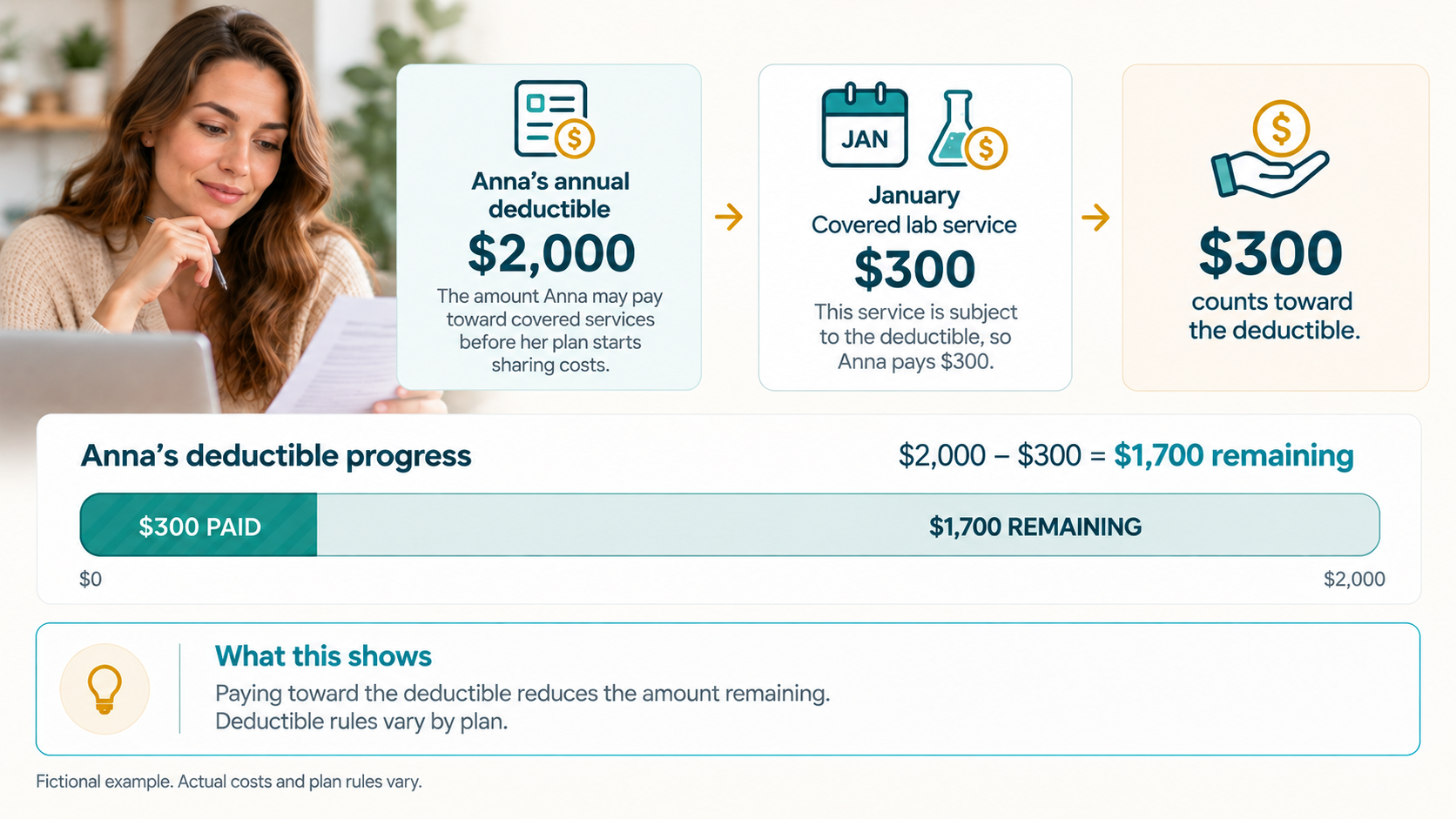
Anna’s health plan has a $2,000 annual deductible.
In January, Anna receives a covered lab service with an allowed amount of $300. Under her fictional plan, this service is subject to the deductible, so Anna pays the $300.
That $300 counts toward her deductible:
$2,000 deductible − $300 = $1,700 remaining
As Anna receives other covered services that are subject to the deductible, additional amounts she pays may continue to count toward it according to her plan’s rules.
What this shows: A deductible can work like a running annual amount. Paying toward it reduces the amount remaining, but deductible rules vary by plan.
Key takeaways
- A deductible is an amount you may pay toward certain covered services before the plan starts paying its share.
- Some covered services may be available before the deductible is met.
- Deductibles do not work the same way in every plan, and not all spending counts toward them.
- Your plan documents are the source for your specific deductible rules.
Educational information only. Examples are fictional and do not describe any real insurer or plan. Health-plan terms and requirements vary — always verify information using your official plan documents. Read the disclaimer.